Excavator operator roles require a combination of technical skill, safety awareness, and familiarity with job-site workflows. Locating these positions in your city or county can be difficult because postings appear on general job boards, trade-specific sites, contractor pages, union lists, and social media. The guidance below provides a structured, compliance-focused approach to refining searches, setting up tailored notifications, building professional networks, and using mobile tools that support geolocation and quick response to postings.
1. Optimizing Geographic Keyword Searches for Local Job Discovery
Start by matching the exact job titles and site-relevant terms employers use. Common variations include “excavator operator,” “digger operator,” “heavy equipment operator,” and “site machine operator.” When searching on major platforms, include the city and state (for example, “excavator operator jobs in Seattle, WA”) or the county to reduce irrelevant listings. Use quotation marks and advanced search operators on search engines to narrow results to exact phrases and combine them with location modifiers, for example: “\”excavator operator\”” AND “Seattle”.
Use the filters available on job sites to set radius and commute-time limits when available. Many job platforms provide options to set distance from a specific ZIP code, or to filter by commute time, which can help prioritize listings that meet your travel constraints. If a platform allows sorting by date posted, prioritize the most recent listings to review openings that are actively managed.
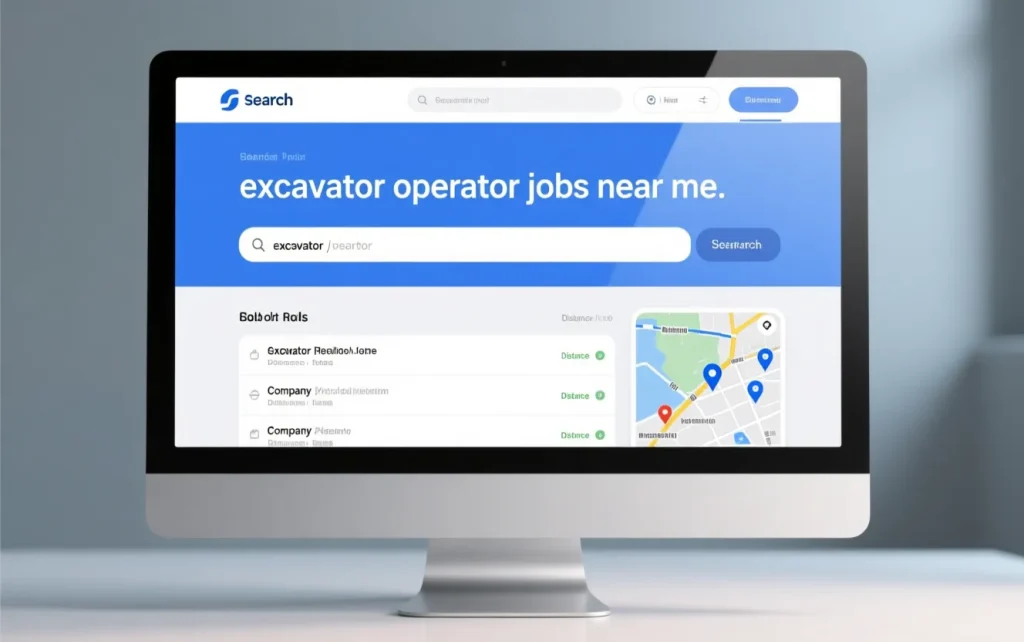
Beyond job boards, check contractor career pages and municipal procurement or public-works postings. Contractors and utilities sometimes list equipment operator positions directly on company websites or in public notices. To capture these, use targeted site searches in a search engine, for example: site:companydomain.com “excavator” plus the city name.
Tips for improving relevance:
- Maintain a short list of title variants and test each on multiple platforms.
- Use city + state or ZIP code instead of ambiguous terms to reduce noise.
- Adjust filters for experience level (entry, intermediate, senior) to match your credentials.
- Save successful search queries or browser bookmarks for quick reuse.
2. Setting Up Location-Based Job Alerts on Major Employment Platforms
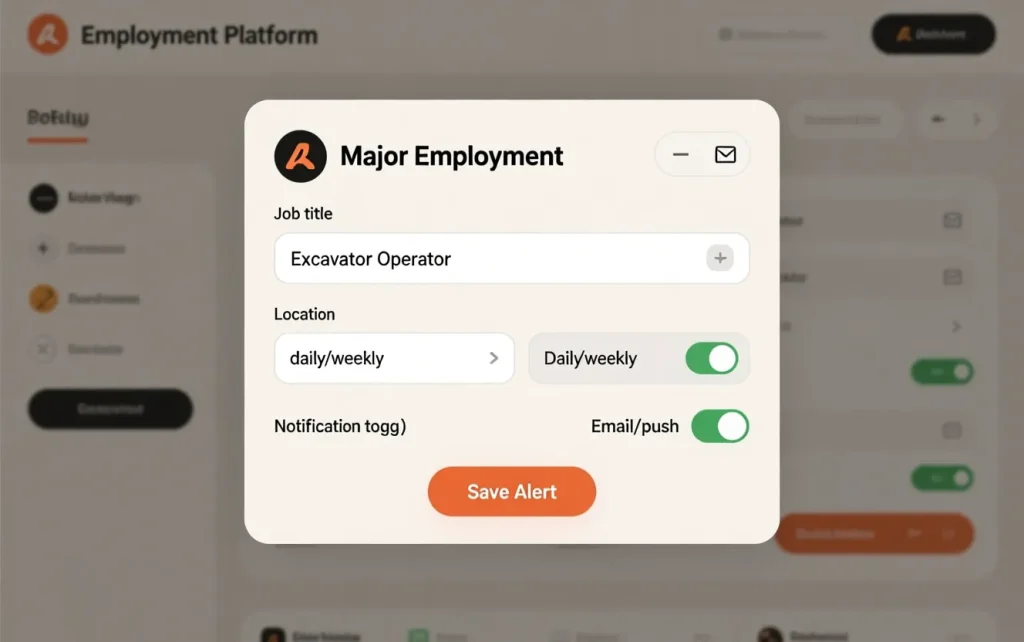
Job alerts can reduce the time spent checking multiple sites manually. Major platforms such as Indeed (indeed.com), LinkedIn (linkedin.com), and ZipRecruiter (ziprecruiter.com) allow you to conp notifications that match specific titles, locations, and experience levels. When creating alerts, use the same title variants and location identifiers you refined in section 1 to keep alerts focused.
General steps to create effective alerts:
- Enter one job title variant and a precise city, county, or ZIP code as the location.
- Choose a reasonable radius or commute preference if the platform provides it.
- Select alert frequency when offered (daily or weekly) based on how actively you want to monitor new postings.
- Refine alert keywords over time by removing false positives and adding high-performing terms.
Examples of platform-specific settings:
- Indeed: Save a search with a title and location; enable email alerts for that saved search.
- LinkedIn: Use job search filters for location and experience, then create an alert that sends notifications via email or the LinkedIn app.
- ZipRecruiter: Set up job match alerts and enable push notifications on mobile devices for faster awareness.
Benefits of alerts often cited by users include earlier visibility on listings and reduced risk of missing time-sensitive openings. Some job boards allow employers to mark listings as actively hiring, which may increase the relevance of alerts when those flags are present.
3. Leveraging Local Construction Industry Networks and Contacts
Direct relationships in the construction community often surface opportunities before they are widely posted. Engage with trade groups, equipment dealerships, training centers, and labor unions relevant to earthmoving and heavy equipment operation. Membership or attendance at vocational events and continuing-education sessions can lead to introductions with hiring forepersons, shop managers, and contractors.

Practical networking approaches:
- Attend regional trade meetings, safety briefings, or operator training days to meet employers and peers.
- Contact local equipment rental yards and dealerships—these businesses often know contractors in need of operators.
- Join industry groups on professional platforms such as LinkedIn or dedicated trade forums; participate by sharing work-ready qualifications and project experience.
- Maintain an up-to-date operator résumé and equipment endorsement list (for example, models and capacities you can operate and current certifications).
When communicating with contacts, present clear, factual details about your qualifications: the machine types you operate, relevant certifications (e.g., OSHA 10/30, NCCER credentials, or employer-specific safety cards), and recent project roles. Keeping communication concise and professional increases the likelihood that contacts will pass your details to hiring supervisors.
4. Utilizing Mobile Job Search Apps with Geolocation Features
Mobile apps can provide push notifications and map-based views of open positions, which may help with quick evaluation of commute times and site locations. Popular mobile job apps include Indeed, ZipRecruiter, LinkedIn, and Glassdoor (glassdoor.com). Enable location permissions only if you are comfortable sharing approximate location data with the app; this can improve relevance when apps support map or radius-based searches.
Best practices for mobile use:
- Enable push notifications and email alerts for high-priority searches so you are informed when new matches are posted.
- Use in-app filters to sort by distance, date posted, and required experience, and save searches that return the most relevant listings.
- Keep a concise mobile résumé and a ready PDF of certifications on your device to expedite sharing with employers who request credentials.
- Use map views to estimate travel time and confirm the worksite is within acceptable commuting range before reaching out to the employer or responding to the posting.
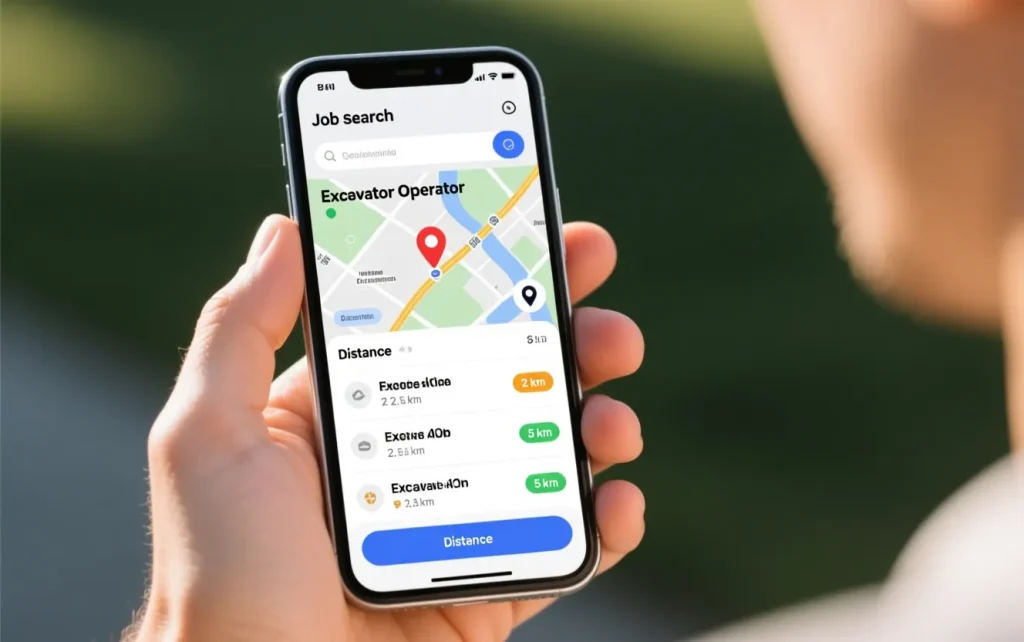
Some mobile platforms also permit direct messaging or quick-response features. When using these, maintain a neutral, professional tone and supply the essential operator qualifications requested. These quick contacts can be helpful for scheduling interviews or arranging pre-screening conversations.
Conclusion
Finding excavator operator opportunities in your city or county often requires combining several approaches: targeted geographic keyword searches, well-conpd job alerts, active engagement with the construction community, and efficient use of mobile apps with geolocation. Each method may contribute differently depending on local labor market dynamics and employer posting habits. By refining title variants, maintaining accurate certification records, and sustaining professional networking, you may increase the likelihood of discovering relevant openings and connecting with hiring personnel. Persistently reviewing and adjusting search parameters and alerts as you learn which sources produce the best matches can help focus your time on the most promising opportunities.